The method I use is one shared by Larry Hountz @ City Hydro
I came across this in a YouTube video by John Kohler. I have been following John for many years and I learned a lot from him on growing vegetables in my backyard. This video is a great introduction and there are detailed grow-along videos on Larry’s YouTube channel.
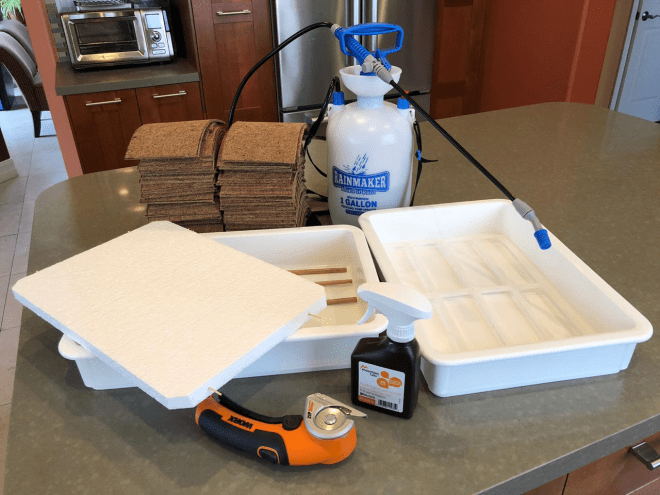
Equipment you will need:
- Growing trays
- I bought a set of 6 trays from City Hydro – these are food grade quality trays and I am sure will last me forever. Worth the investment
- if you don’t want to get that many trays upfront, you can buy the same trays from Amazon individually for a little bit more per tray
- Spacers
- I bought food grade plastic spacer from City Hydro. The package includes a set of 2 spacers and grow pads that I used to start growing with.
- Cheaper alternative is to use bamboo sticks like this one on Amazon
- Sprayer
- I am using Rainmaker sprayer, this is the same sprayer that Larry uses and it is working out good.
- Hydrogen Peroxide Spray bottles
- Got them from Amazon. Later on planning to get them from local drug store.
- Coconut Mat
- Initially used the ones from City Hydro that came with the spacers.
- Bought 4′ x 8′ CocoTek mat from local hydroponic store for $45. I cut them as shown in Larry’s tutorial using power scissors. This requires some time but you get 114 pieces that will last for a while. This mat is also available from Amazon.
- Water
- I use filtered water from my reverse osmosis filter that I use at my home. Tap water contains chlorine and/or Chloramine that needs to be removed.
- Seeds
- I ordered seeds from True Leaf Market. They carry Non-GMO seeds and I had had good
- Broccoli, Kale and Cabbage are the easiest microgreens to grow, they do not have strong flavor and can be used in salads and smoothies as well. I will recommend to start with those until you get confidence.
- Lid
- I got 3/4″ Polystyrene Foam from Home Depot and cut it to size with sharp knife.
Pros with this method:
- More hygienic
- Less chance of mould
- Easier to harvest the microgreens – no soil contaminants
- Easier to share live microgreens with friends – just cut them a piece of the mat
Cons of this method:
- Equipment is expensive
- Need to plan a day in advance on starting the tray as mats need to be soaked
- Setting up trays with seeds more time consuming
- Cutting coco rolls into mats takes time
- Not all seeds can be grown with this method
- Longer time to harvest compared to the soil method
 Let's Grow Greens